
October 5, 2026
Clean baby bottles and feeding items
Clean bottles after each feed and air-dry every part. Ask about extra sanitizing for very young or premature babies, or a weakened immune system.
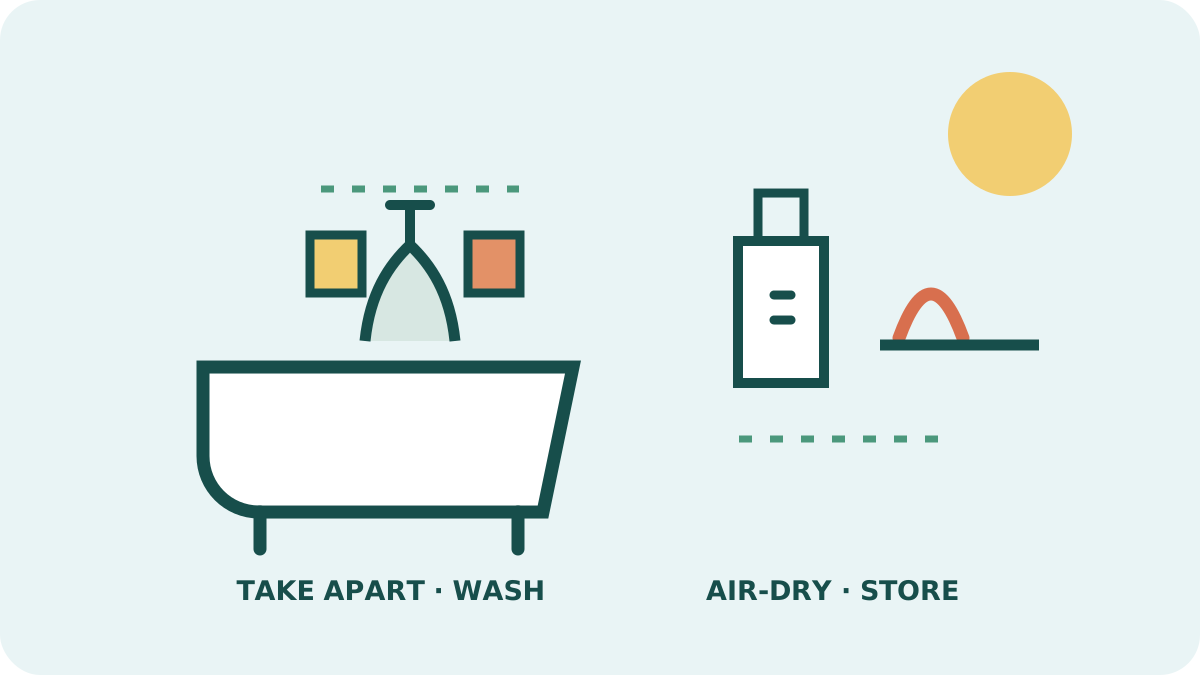
Wash every bottle part after each feeding, then let the parts and cleaning tools dry fully in a clean area. CDC guidance recommends daily sanitizing for babies under two months, babies born prematurely, or babies with weakened immune systems; for older, healthy babies, careful washing may be enough. These are U.S. public-health recommendations, so follow local advice and each product’s instructions too. CDC’s step-by-step cleaning and sanitizing guidance IDAI pediatric medical service manual
Key takeaways
- Clean bottles after each use; take apart nipples, rings, caps, valves, and membranes.
- Use a clean basin and brush reserved for feeding items, then air-dry completely.
- Ask about additional sanitizing for babies younger than two months, born prematurely, or with a weakened immune system.
| Prepare | Wash your hands; check the product manual and use a clean dedicated basin. |
|---|---|
| Take apart | Separate the bottle, nipple, ring, cap, valve, and membrane so each surface can be reached. |
| Wash and rinse | Scrub each part with soap, water, and a brush used only for feeding items; rinse with clean water. |
| Dry and store | Air-dry fully on a clean surface, then store protected from dust and dirt. |
| Sanitize | Ask about extra sanitizing for higher-risk infants and use a method allowed by the item’s instructions. |
Set up a small washing station
- Keep a clean basin and bottle brush together, separate from the kitchen sink and other cleaning tools.
- After a feed, take the bottle apart and wash every piece; do not just rinse it.
- Place parts and tools on a clean, unused surface and allow them to air-dry fully.
- Wash the basin and brush too; follow the product and local guidance for sanitizing.
What to observe
Notice whether small parts are easy to find, whether the brush or basin stays clean, and where clean pieces dry. A shared checklist can help caregivers follow the same routine.
A useful note to keep
If you are sorting out a routine, note which parts are included, where they are washed and dried, and whether your clinician advised additional sanitizing. Do not track a family’s cleanliness as a score.
A question for a clinician
Ask your clinician whether your baby’s age, prematurity, or immune health calls for extra sanitizing, and which methods fit your feeding items.
Limits of this guide
Cleaning guidance and products differ by country and item. This guide summarizes CDC U.S. guidance; follow your local health authority, clinician, and manufacturer instructions. Tracking is not diagnosis, and individual concerns belong with a qualified clinician.
Related Emomo guides: Practising an open cup with a toddler Learning in everyday routines Browse all Emomo guides
Sources
Every figure in this guide traces to one of these sources.
- CDC: How to Clean, Sanitize, and Store Infant Feeding Items (updated 2025-03-19)
- IDAI: Pedoman Pelayanan Medis Ikatan Dokter Anak Indonesia
General information, not medical advice. Talk to your pediatrician about your own child.

- Category
- Parenting · Child development
- Type
- Baby milestone & activity companion
- Compatibility
- iPhone (iOS) and Android
- Business model
- Free to start, for little ones 0–24 months
 Press ContactThe Learning Time team