
September 20, 2026
Baby learning in everyday routines
Dressing, bathing, and tidying can become short learning moments: notice what interests your baby, name it, pause, and respond without adding another task.
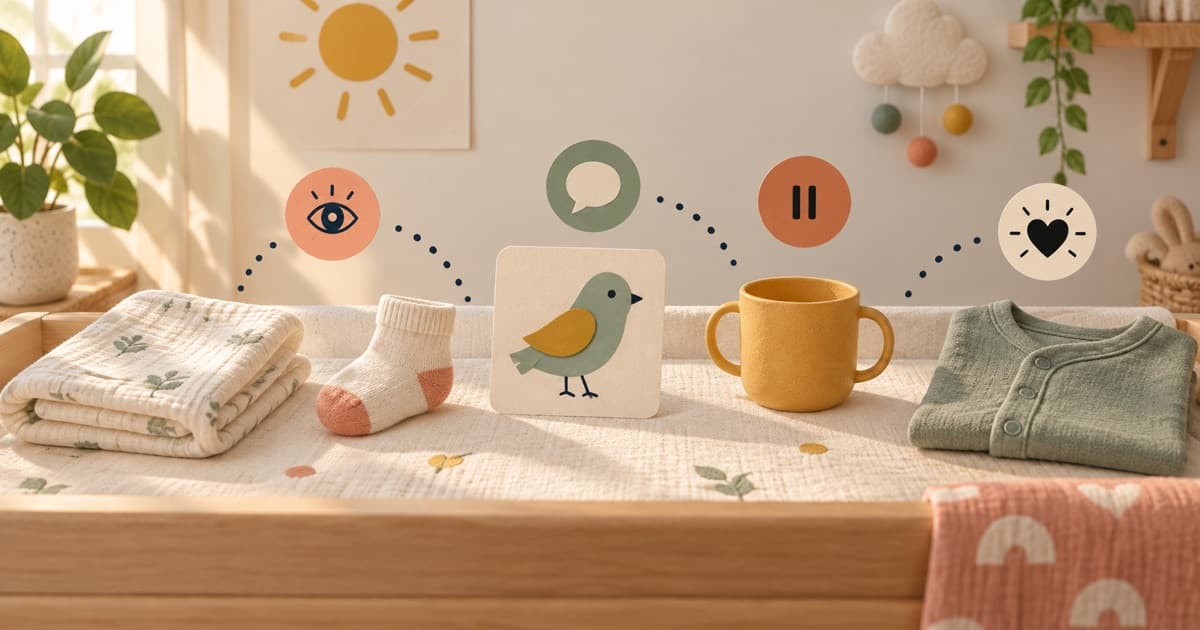
Everyday care can hold a small learning exchange without becoming a lesson. During dressing, bathing, or tidying, notice what your baby attends to, name one object or action, pause, and respond to the next look, sound, or movement. WHO guidance places play and communication inside daily routines, not only in scheduled activity time. WHO nurturing-care guidance Kemenkes stimulation guidance
Key takeaways
- Choose one moment already happening instead of adding a separate activity.
- Use short, concrete words for what your baby can see, hear, or feel.
- Pause after speaking so the routine can become a two-way exchange.
- Care needs come first; stop the play layer when your baby is tired or uncomfortable.
Turn one routine into a tiny exchange
| Getting dressed | Name the sock or sleeve your baby is looking at. |
|---|---|
| Bath preparation | Describe warm water or a soft cloth, then pause. |
| Tidying | Let your baby watch one large safe object go into a basket. |
| Leaving home | Name the familiar person, bag, or doorway in view. |
The useful part is shared attention, not constant narration. One word and a pause can be more responsive than a stream of instructions. Keep the routine safe and comfortable, and do not treat a baby's response as a test. Kemenkes advises stimulation that is age-appropriate, pleasant, and free from force or punishment. Buku KIA Kemenkes article
Observe, record, and ask
Observe which routine draws a look, sound, reach, or calm pause. Record one dated example only when it helps another caregiver or a care visit. Ask a qualified clinician about a persistent change in interaction, movement, hearing, vision, feeding, or comfort. Explore the newsroom hub, serve-and-return guide, and caregiver handoff note. Tracking is not diagnosis. baby-development guides serve-and-return play caregiver handoff note
Sources
Every figure in this guide traces to one of these sources.
- WHO — Nurturing Care Practice Guide (2025)
- Kemenkes RI — Stimulasi tumbuh kembang dengan Buku KIA (2025)
- Kemenkes RI — Buku KIA 2024
General information, not medical advice. Talk to your pediatrician about your own child.

- Category
- Parenting · Child development
- Type
- Baby milestone & activity companion
- Compatibility
- iPhone (iOS) and Android
- Business model
- Free to start, for little ones 0–24 months
 Press ContactThe Learning Time team