
September 14, 2026 · Updated: September 23, 2026
1-year baby milestones: four-pillar guide
A clear one-year development guide for movement, problem-solving, connection, and early language, with questions to take to your pediatrician.
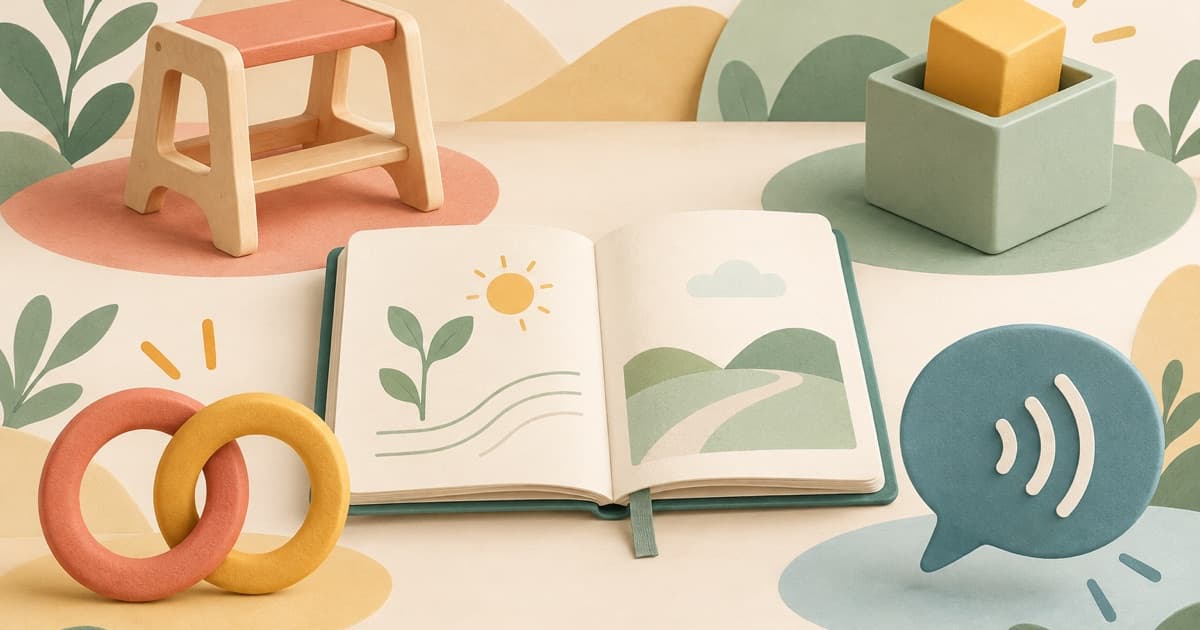
A first birthday is a useful moment to pause, not a finish line. The CDC one-year examples include pulling up and walking while holding furniture, putting an object into a container, playing games with you, and using a special name for a parent. Some babies are already taking independent steps; others are still cruising. Both can fit a wide, healthy range.
What to notice at 12 months
This table gives you useful observations, not targets your baby must perform on cue. Development moves in ranges, and a baby may show one pillar before another.
| Physical | Pulls up to stand, cruises while holding furniture, and picks up small food with thumb and finger. |
|---|---|
| Cognitive | Puts an object into a container, searches for a hidden toy, and explores how things work. |
| Social | Plays pat-a-cake or another back-and-forth game, waves, and checks your reaction. |
| Language | Uses a special name for a parent, understands a familiar word, and uses gestures to communicate. |
Read the pattern, not one performance
Babies may be lively in the morning, quiet with a new person, or unwilling to repeat a skill when tired. One day without a performance does not mean a skill has vanished. Look across a few routines and record the help you offered. That small pattern is more useful to you and a pediatrician than a score or percentile.
If this age falls between CDC checklists
The CDC publishes checklists at selected ages, not every month. Do not fill the gaps with deadlines you invented. Use the nearest checklist as a conversation prompt and watch the pattern that emerges over days.
Three ways to play without testing
- Offer a large container and a few large, safe objects to put in and take out together.
- Pause during a familiar song so your child can gesture, vocalise, or signal for the next part.
- Create a safe path between sturdy furniture and stay close while your child cruises.
A tiny routine you can repeat
- Choose one calm moment, such as after a nap or feed.
- Offer one object or invitation, then wait instead of repeating it quickly.
- Name what your baby did and leave room for another attempt.
- Write one sentence if something is new, then carry on.
Play is an invitation. If your baby turns away, yawns, or becomes upset, stop and offer a break. For sleep, follow safe-sleep guidance and place your baby on their back in their own safe sleep space.
A short record that helps your pediatrician
Record the date, what happened, and how much help you gave. “Reached for the block during floor play; I held it near the left hand” is more useful than “doing well.” Bring your questions and patterns to the next visit.
If you use Emomo, save the observation under the pillar that fits and look again a week later. The aim is to remember real change, not fill every box. A skill that appears in two languages or two routines can be recorded as two parts of the same story.
When to ask
Contact your child’s doctor at any age if a skill they clearly had disappears, several areas concern you, or something feels unusual. If your baby was born prematurely, ask how corrected age should be used for their development.
Frequently asked questions
Should a one-year-old be walking independently?
Not necessarily. The CDC one-year checklist describes pulling to stand and walking while holding furniture; independent walking has a broad WHO range. Discuss movement, weight-bearing, and any concern with your pediatrician.
What language counts at one year?
Gestures, understanding familiar words, babbling, and a special name for a parent all count as communication. A single spoken word is not the only meaningful sign.
What should I bring to the one-year visit?
Bring observations, questions, a list of skills that are emerging, and any record of a skill that disappeared. A short, safely captured video can help explain a movement that is hard to describe.
Sources
Every figure in this guide traces to one of these sources.
General information, not medical advice. Talk to your pediatrician about your own child.

- Category
- Parenting · Child development
- Type
- Baby milestone & activity companion
- Compatibility
- iPhone (iOS) and Android
- Business model
- Free to start, for little ones 0–24 months
 Press ContactThe Learning Time team