
September 23, 2026
Open-cup practice with your toddler
Practise an open cup at meals with a small amount of water, a stable seat, and close help. Expect spills, follow cues, and record the support used.
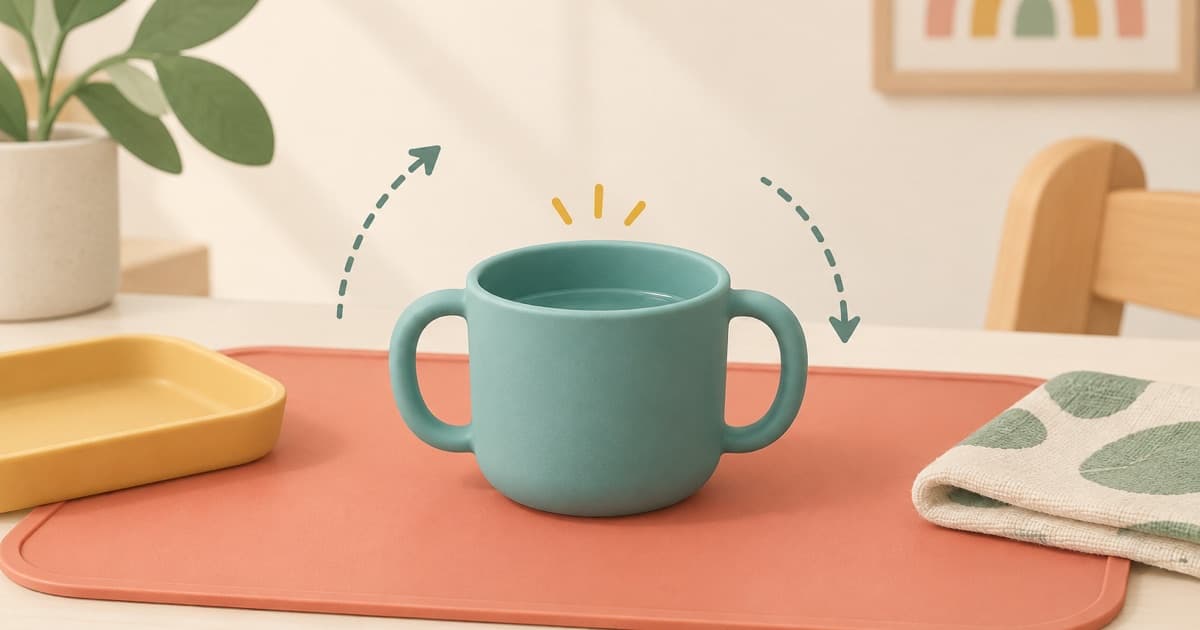
Open-cup practice works best as a small part of a seated meal. Use a child-sized cup, add only a little water, and guide it with two hands if needed. Let your toddler choose whether to try another sip. Spilling is expected; the goal is practice, not finishing a set amount.
Key takeaways
- Practise while your toddler is seated upright and supervised.
- Start with a small, light cup and a small amount of water.
- Follow hunger, thirst, and stop cues; do not force another sip.
- Keep feeding advice separate from developmental observation.
| Cup tips too fast | Use less liquid and support the base together. |
|---|---|
| Two hands reach | Pause and let your toddler complete the lift. |
| Coughing or distress | Stop immediately and follow appropriate medical guidance. |
| Turns away | Set the cup down and offer again at another meal. |
A calm meal-time practice
- Seat your toddler upright in a stable, age-appropriate seat.
- Add a small amount of plain water to a light open cup.
- Offer hand-over-hand support only as much as needed.
- Wipe the spill together and finish without praise tied to volume.
What you can observe
CDC includes drinking from a cup without a lid, with possible spills, among 18-month examples. Notice how your child reaches, tilts, closes their lips, and sets the cup down. WHO guidance also emphasizes responsive feeding: watch and respond to the child's cues.
What is useful to record
Note the cup, liquid amount, posture, help given, and what ended the attempt. Record repeated coughing, discomfort, or a clear change, not the number of perfect sips.
A question for your clinician
Ask a clinician: “Is my child's cup practice safe for their feeding and health history, and what signs mean we should stop or seek an assessment?” Individual guidance matters for swallowing, motor, or medical differences.
Limits of this guide
This guide does not set fluid needs, replace feeding assessment, or advise bottle weaning for a specific child. Tracking is not diagnosis. Seek qualified care for coughing, choking, breathing difficulty, poor growth, pain, or another concern.
See the everyday-routines guide and the Buku KIA record guide for broader context. learning in everyday routines using Buku KIA as a development record
Sources
Every figure in this guide traces to one of these sources.
- CDC — Milestones in Action: By 18 Months
- WHO — Complementary feeding
- American Academy of Pediatrics — From Bottle to Cup
- Kementerian Kesehatan RI — Buku KIA 2024
General information, not medical advice. Talk to your pediatrician about your own child.

- Category
- Parenting · Child development
- Type
- Baby milestone & activity companion
- Compatibility
- iPhone (iOS) and Android
- Business model
- Free to start, for little ones 0–24 months
 Press ContactThe Learning Time team