
September 19, 2026
When your baby needs a play break
Follow your baby's state, not the activity plan. Looking away, becoming fussy, or losing smooth engagement can mean it is time to slow down, change, or stop.
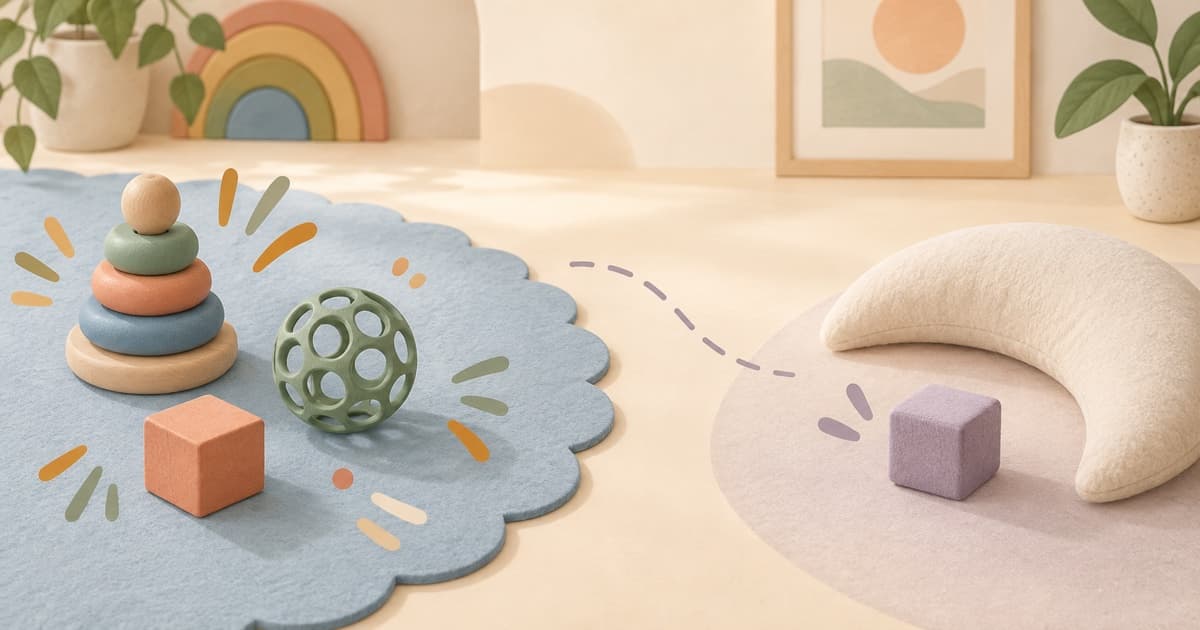
A useful play session ends when your baby has had enough, even if the activity card is not finished. Babies move between sleepy, calm-alert, active-alert, and crying states. The AAP describes calm alertness as a good time for interaction, while the CDC advises watching for tired or fussy signals and allowing a break. AAP newborn-state guide CDC play-and-pause advice
Key takeaways
- Start when your baby is awake, settled, and available for interaction.
- Treat looking away, yawning, fussing, stiffening, or disorganized movement as context, not a diagnosis.
- Reduce sound or movement first; then change position or stop if the cue continues.
- Never use play to delay feeding, sleep, comfort, or care your baby needs.
Choose the smallest helpful response
| Eyes bright; body settled | Offer one simple sound, face, or object. |
|---|---|
| Looks away briefly | Pause and wait instead of bringing the toy closer. |
| Repeatedly turns away or fusses | Lower stimulation, change activity, or stop. |
| Drowsy, hungry, or uncomfortable | Meet the care need rather than continuing play. |
A cue has meaning in context. Looking away can be a short pause, interest in something else, or the end of play. You do not need to label every movement. Respond gently, see what happens next, and avoid repeatedly testing the same reaction.
Observe, record, and ask
Observe the setting, the cue, and what helped. Record a repeated pattern only if it would help another caregiver or a care conversation. Ask a clinician about persistent changes in alertness, interaction, feeding, movement, or comfort. Browse the guide hub or pair this with supervised floor play. Tracking is not diagnosis. baby-development guides serve-and-return play supervised tummy time
Sources
Every figure in this guide traces to one of these sources.
General information, not medical advice. Talk to your pediatrician about your own child.

- Category
- Parenting · Child development
- Type
- Baby milestone & activity companion
- Compatibility
- iPhone (iOS) and Android
- Business model
- Free to start, for little ones 0–24 months
 Press ContactThe Learning Time team