
September 23, 2026
Toddler scribbling: a calm first art setup
Set up toddler scribbling with large age-labelled crayons, secured paper, close supervision, and no expectation of a picture. Notice grip, marks, and interest.
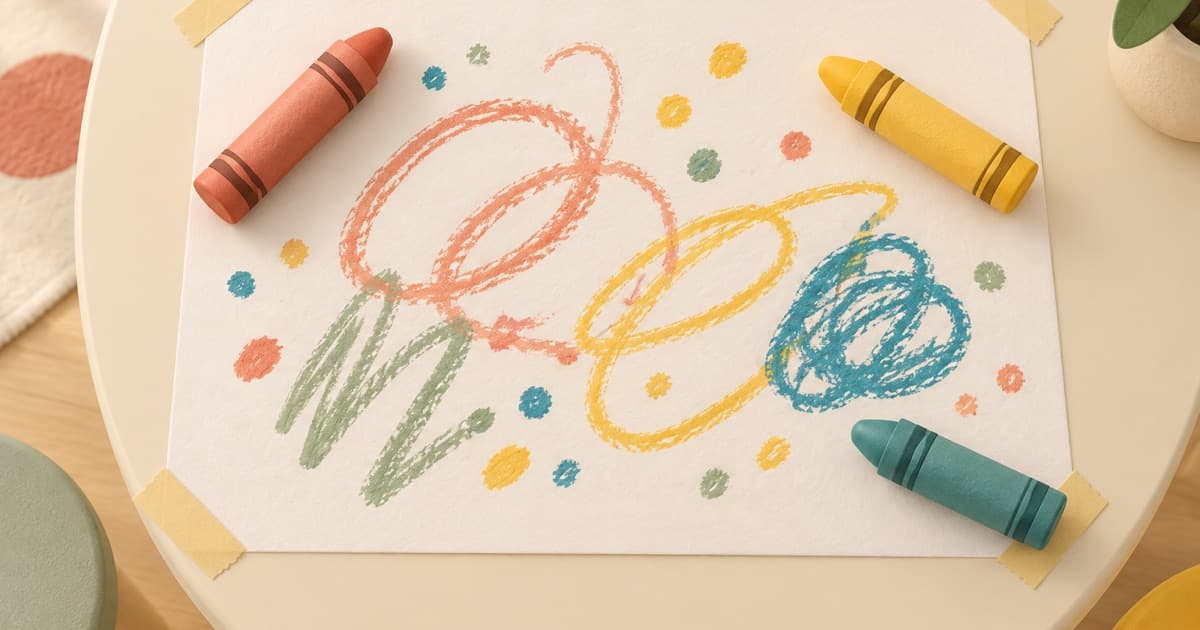
Early scribbling is mark-making, not drawing a recognizable picture. Tape a large sheet of paper to a stable surface, offer one or two chunky age-labelled crayons, and stay close. Let your toddler make dots, sweeps, or loops. Describe the movement and colour without correcting grip or asking what it is.
Key takeaways
- Choose supplies made and labelled for your child's age.
- Use large crayons and paper; avoid loose caps and small pieces.
- Keep the session short and supervise every moment.
- Notice movement and choice, not whether the marks look like an object.
| Dots or taps | Name the action and leave room for repetition. |
|---|---|
| Broad sweeps | Keep the paper still and describe fast or slow movement. |
| Switches hands | Let the child choose; do not assign a dominant hand. |
| Mouths the crayon | Remove it calmly and end or redirect the activity. |
A safer, lower-pressure setup
- Read the package age label and check that each crayon is intact.
- Tape a large sheet of paper to a stable, wipeable surface.
- Offer one or two colours while sitting within reach.
- Stop when the crayon goes to the mouth or interest fades.
What you can observe
CDC lists scribbling among examples most children can do by 18 months. You may notice a whole-hand grip, repeated taps, or long arm movements. A single quiet session says little; look for how your toddler explores across several ordinary opportunities.
What is useful to record
Record what tool and surface you offered, which hand or hands were used, the movement, and whether you steadied the paper. Avoid scoring the grip or saving every page as proof.
A question for your clinician
If you have a fine-motor concern, ask: “What hand and finger movements should I watch during play and meals, and would an assessment be useful?” Mention any difference between the two sides or loss of a skill.
Limits of this guide
Scribbling is one play observation, not a handwriting test or diagnosis. Product labels and supervision matter because art materials can contain small parts or hazards. Contact a clinician or poison service promptly if an exposure occurs.
Connect this activity to the milestone hub and safe reaching play. baby milestones by month reach-and-grasp play
Sources
Every figure in this guide traces to one of these sources.
- CDC — Milestones in Action: By 18 Months
- U.S. Consumer Product Safety Commission — Art Materials
- Kementerian Kesehatan RI — Buku KIA 2024
General information, not medical advice. Talk to your pediatrician about your own child.

- Category
- Parenting · Child development
- Type
- Baby milestone & activity companion
- Compatibility
- iPhone (iOS) and Android
- Business model
- Free to start, for little ones 0–24 months
 Press ContactThe Learning Time team