
September 21, 2026
Reach-and-grasp play with your baby
Offer one large, safe object within comfortable reach, pause, and let your baby choose whether to look, touch, or grasp. This is play, not a milestone test.
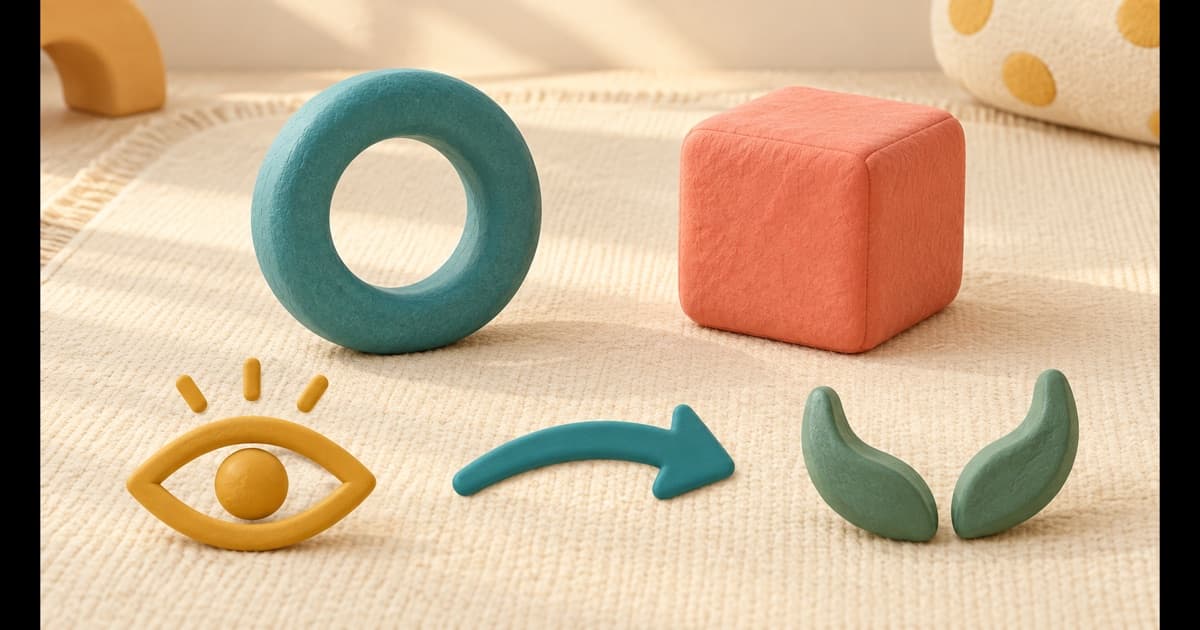
Reach-and-grasp play can be as simple as placing one large, clean object where your baby can notice it and make an unhurried attempt. UNICEF suggests moving a baby-safe cloth or toy toward the hand and offering opportunities on both sides. AAP guidance likewise treats reaching and grabbing as ordinary active play, not a drill. UNICEF activity guidance AAP active-play guidance
Key takeaways
- Use one intact object that is too large to swallow and has no loose parts.
- Start within easy reach; move it only a little farther if your baby stays comfortable.
- Offer from either side across separate turns without forcing one hand open.
- Stop when your baby turns away, stiffens, fusses, or needs care.
A reach-and-pause decision guide
| Looks but does not reach | Keep the object still and close; looking is participation. |
|---|---|
| Swipes or touches | Pause so your baby can repeat or rest. |
| Grasps and mouths it | Stay within reach and confirm the object is clean, intact, and mouth-safe. |
| Uses one hand today | Offer another turn from the other side without treating symmetry as a test. |
Choose the position your baby already uses comfortably and keep breathing and movement unobstructed. Do not prop a baby into a position they cannot maintain, and never attach a reaching object with a cord. Buku KIA recommends stimulation in a safe, comfortable, pleasant setting. Buku KIA safe play-object guide
Observe, record, and ask
Observe the position, object, distance, and whether your baby looked, touched, grasped, transferred, or mouthed it. Record a dated example only when a pattern would help another caregiver or a care visit. Ask a qualified clinician about a persistent movement, vision, comfort, or one-sided-use concern. Explore the newsroom hub and supervised tummy-time guide for context. Tracking is not diagnosis. baby-development guides supervised tummy-time play
Sources
Every figure in this guide traces to one of these sources.
- UNICEF — 21 learning activities for babies and toddlers
- AAP — How active is your baby?
- Kemenkes RI — Buku KIA 2024
General information, not medical advice. Talk to your pediatrician about your own child.

- Category
- Parenting · Child development
- Type
- Baby milestone & activity companion
- Compatibility
- iPhone (iOS) and Android
- Business model
- Free to start, for little ones 0–24 months
 Press ContactThe Learning Time team