
September 29, 2026
Babies, toddlers, and family pets
Set up calm, supervised spaces for a baby and a household pet, and know when to keep them apart.
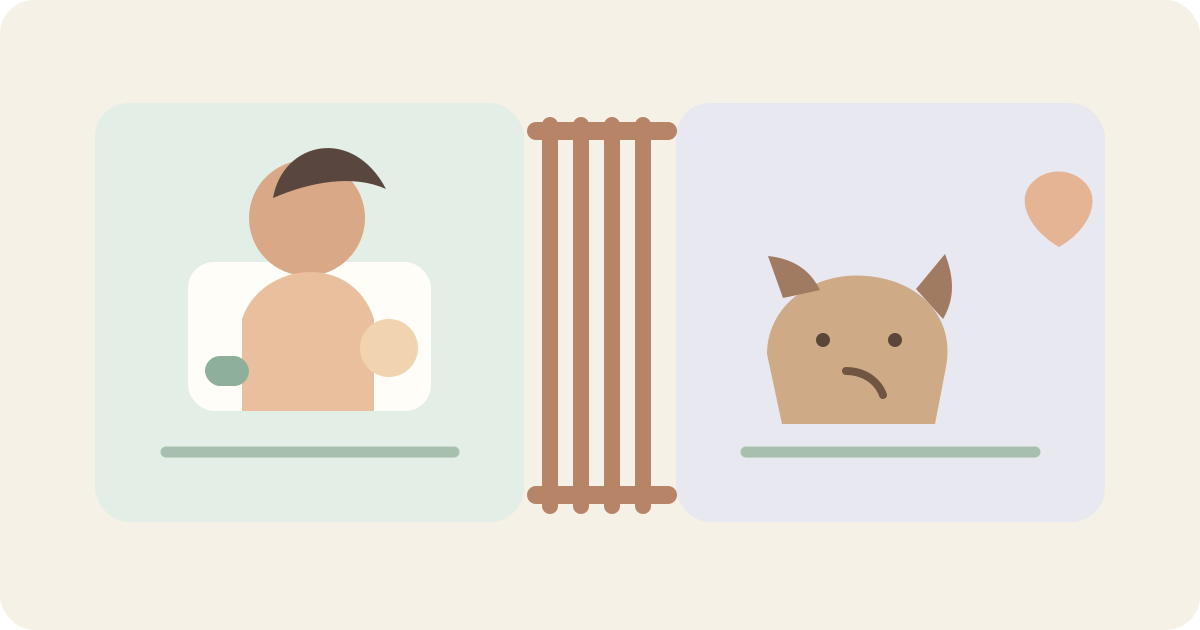
Keep a baby and a household pet in separate, supervised spaces unless a responsible adult is close enough to actively manage the interaction. Give the animal a protected place to eat and rest, and keep the baby’s sleep space pet-free. A familiar pet can still startle or react; never leave a baby or young toddler alone with an animal. CDC child-and-dog supervision guidance AAP guidance on children and pets
Key takeaways
- An adult stays present and attentive for every baby–pet interaction.
- Use a gate or closed door to protect the pet’s food, rest area, and the baby’s sleep space.
- Let the animal move away; do not force contact or place the baby beside a pet.
- Ask a veterinarian about the pet’s care and a clinician about a bite, scratch, allergy, or health concern.
| Adult can stay close and watch | Keep the interaction brief, calm, and fully supervised. |
|---|---|
| Adult needs to step away | Separate the spaces with a secure barrier or closed door. |
| Pet is eating, sleeping, hiding, or guarding an item | Give the pet space; do not invite the baby closer. |
| A bite or scratch happens | Separate safely and contact a health professional for guidance. |
Prepare two spaces before the first meeting
- Set up a pet-only place that the baby cannot enter, including access to food and water.
- Keep the baby’s sleep space and play area separate from pet bowls, toys, and litter or waste areas.
- If you choose to introduce them, have another adult manage the pet while you hold or attend to the baby.
- End the interaction when either one seems unsettled; there is no need to repeat it on a schedule.
What to observe
Notice whether the pet can retreat, whether the baby reaches toward the animal, and what the adult did to keep both safe. Do not treat a calm meeting as proof that future contact can be unsupervised.
A useful note to keep
If it helps your household, note which barrier or routine worked and any care question for the veterinarian or clinician. The note is for planning; it cannot assess animal behavior, allergy, or injury risk.
A question for a clinician
“What should we change at home so our baby and pet each have a safe space?” Ask a veterinarian about animal-specific behavior or health concerns.
Limits of this guide
This guide covers prevention, not animal training, diagnosis, or bite treatment. Safety depends on the animal, child, room, and adult supervision at that moment. Tracking is not diagnosis; contact a qualified health professional after a bite or scratch and follow local rabies guidance.
For a safer infant play area and object hygiene, see these related guides. set up a safe baby exploration space clean shared baby play objects
Sources
Every figure in this guide traces to one of these sources.
- CDC — Dogs: prevent bites and scratches
- AAP — How to Choose the Right Pet for Your Family
- WHO — Want a friend? Be a friend!
- Kementerian Kesehatan — Rabies public guidance, 2026
General information, not medical advice. Talk to your pediatrician about your own child.

- Category
- Parenting · Child development
- Type
- Baby milestone & activity companion
- Compatibility
- iPhone (iOS) and Android
- Business model
- Free to start, for little ones 0–24 months
 Press ContactThe Learning Time team