
September 24, 2026
Helping toddlers learn to take turns
Try short toddler turn-taking with a ball or blocks. Name each turn, stay close, and give a child a simple activity while they wait.
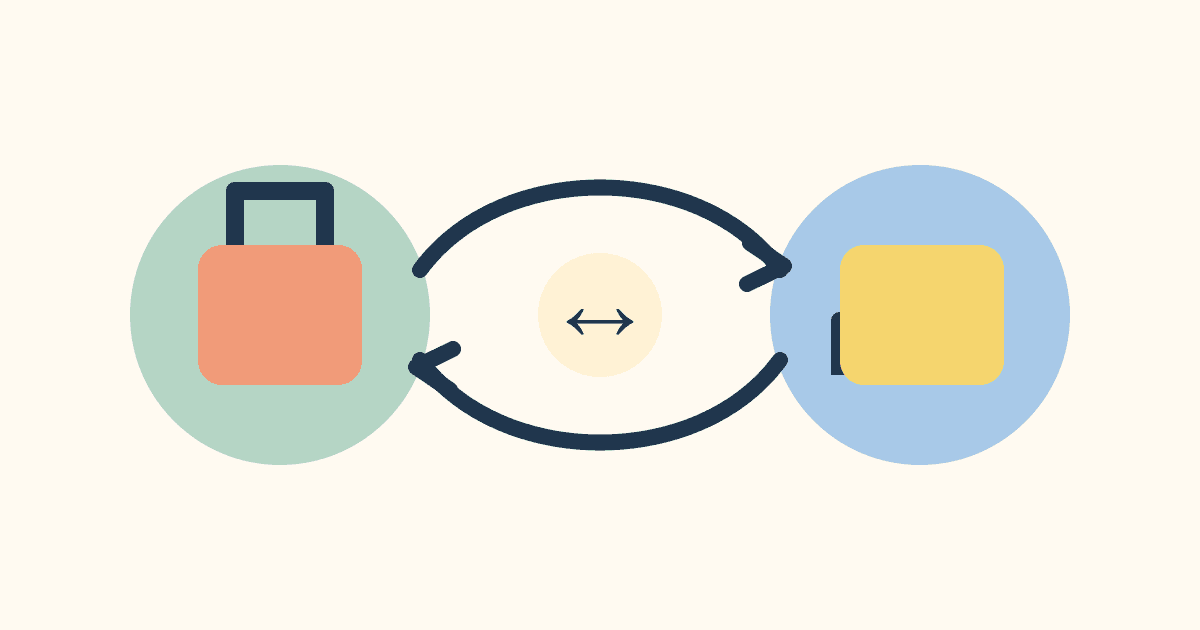
Turn-taking grows through supported practice; it is not a sharing test. Around age two, the CDC describes children as often playing beside one another while still learning to share and solve conflicts. Try a brief back-and-forth with a ball or blocks, name whose turn it is, and help each child find something to do while waiting. CDC's age-two social-play guidance CDC's toddler activity suggestions
Key takeaways
- Begin with an easy activity that naturally comes back to the other person.
- Say whose turn it is and what happens next in a few words.
- Stay nearby and calmly stop grabbing or hitting; do not force a child to hand over a comfort toy.
- Notice a small wait, look, gesture, or offer without scoring the play.
| Both reach for one toy | Keep the toy safe, name the problem, and offer a short turn or a second activity. |
|---|---|
| One child is using it | Let them finish a brief turn; tell the waiting child what they can do meanwhile. |
| Waiting becomes too hard | Pause the shared game and help each child settle with a separate activity. |
| A child offers a turn | Describe the action warmly; there is no need to demand a repeat. |
Try a two-person turn game
- Choose a large ball to roll, a sturdy block to place, or another safe object with no small parts.
- Show one turn: “I roll it to you.” Wait for the child to respond in their own way.
- Pass the object back and name the next turn. Keep the activity short and easy to stop.
- If children compete for the object, protect hands and bodies first, then offer another turn or separate play.
What you can observe
Notice whether your toddler watches another child, waits briefly, copies an action, or asks for help with a word or gesture. Context matters: an unfamiliar group, tiredness, and a new toy can change what you see.
What is useful to record
Write down the setting, what each child was doing, and the support that helped. “At the park, watched Mira roll twice, then handed the ball to Dad” is more useful than a label such as “good at sharing.”
A question for your clinician
At a routine visit, you might ask: “How can I support my child in a group when they want the same toy as another child?” Share an ordinary example from home, the park, or childcare.
Limits of this guide
A brief play moment cannot measure a child's social development. Children learn these skills at different times and in different settings. Tracking is not diagnosis; ask a qualified clinician about a lost skill, several concerns, or anything that worries you.
For a wider development picture, start with the milestone guide and see a gentle way to name big feelings. the baby milestones guide naming feelings with your toddler
Sources
Every figure in this guide traces to one of these sources.
- CDC — Milestones in Action: By 2 Years
- CDC — Positive Parenting Tips: Toddlers (2–3 years old)
- UNICEF Indonesia — Preparing your child for preschool
General information, not medical advice. Talk to your pediatrician about your own child.

- Category
- Parenting · Child development
- Type
- Baby milestone & activity companion
- Compatibility
- iPhone (iOS) and Android
- Business model
- Free to start, for little ones 0–24 months
 Press ContactThe Learning Time team