
September 19, 2026
Singing and rhythm play with your baby
Sing a familiar song, pause, and notice your baby's response. Voice, rhythm, and repetition can create a warm exchange without testing performance.
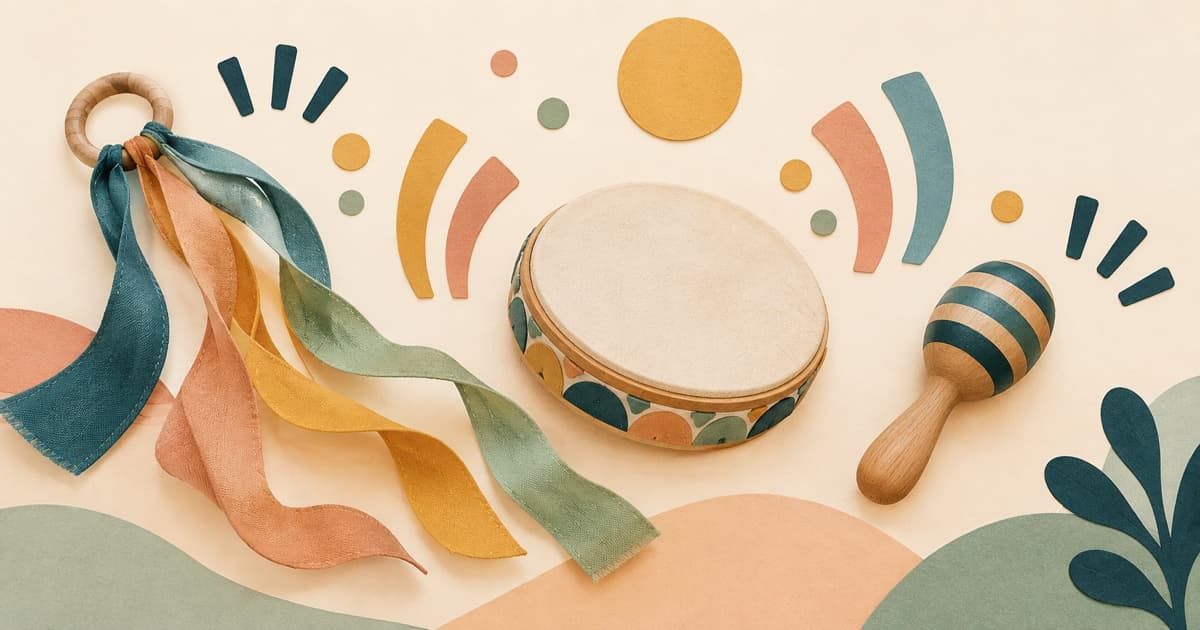
Singing with a baby can be a short, responsive game: choose a familiar tune, keep the sound comfortable, pause, and notice whether your baby looks, moves, vocalizes, or needs a break. CDC infant guidance includes singing and music among everyday interactions. IDAI also lists singing, talking, reading aloud, and responding to babble as early language stimulation. CDC infant guidance IDAI early-language guidance
Key takeaways
- Your own voice is enough; a recording, instrument, or special playlist is optional.
- Repeat a short line, then pause so the baby has room to answer in any way.
- Follow comfort cues and keep sound sources at a gentle level and distance.
- Singing supports interaction; it is not a treatment, hearing test, or measure of intelligence.
Build a tiny rhythm exchange
| Begin | Sing one familiar line in your natural voice. |
|---|---|
| Pause | Leave a quiet beat and watch for a look, sound, or movement. |
| Respond | Copy the baby's sound or repeat the line once. |
| Finish | Slow down and stop when attention shifts or tired cues appear. |
Songs from any family language can work because the useful part is the shared exchange, not a particular playlist. Avoid claims that one song will make a baby speak sooner. If you add a shaker or drum, choose an age-appropriate object, supervise it closely, and keep small parts and loud sounds away.
Observe, record, and ask
Observe the song, volume, setting, and baby's response. Record a favorite interaction or a repeated concern, not a score. Ask a qualified clinician about hearing or communication concerns rather than trying to test them with music. Browse the newsroom hub, shared-reading guide, and hearing-note guide for related context. Tracking is not diagnosis. baby-development guides reading together hearing observations
Sources
Every figure in this guide traces to one of these sources.
General information, not medical advice. Talk to your pediatrician about your own child.

- Category
- Parenting · Child development
- Type
- Baby milestone & activity companion
- Compatibility
- iPhone (iOS) and Android
- Business model
- Free to start, for little ones 0–24 months
 Press ContactThe Learning Time team