
September 23, 2026
Safe climbing play at home
Channel toddler climbing into a low, stable, supervised setup. Clear the landing area, anchor real furniture, and notice how your child plans each movement.
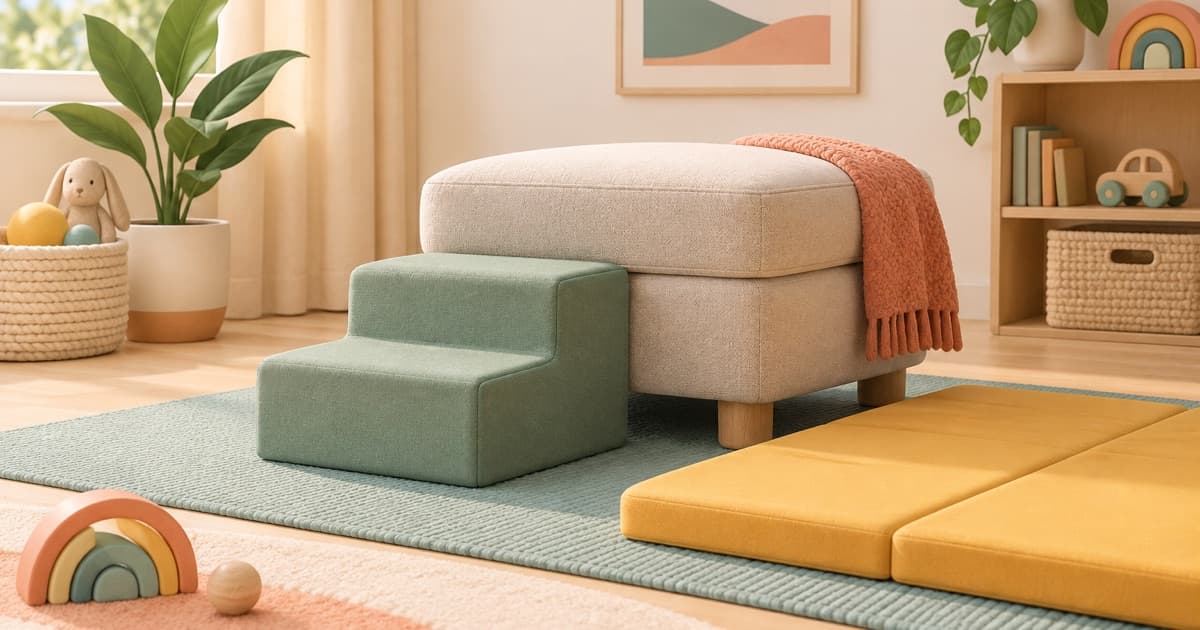
Toddlers often practise climbing as their balance and planning change. Create a low route with purpose-made foam equipment or a stable, floor-level cushion setup, clear the landing area, and stay within reach. Do not turn shelves, drawers, tables, or unanchored furniture into play equipment.
Key takeaways
- Keep practice low, stable, dry, and fully supervised.
- Anchor furniture and remove objects that invite unsafe climbing.
- Let your toddler plan the movement instead of lifting them to the top.
- End when balance, attention, or energy fades.
| Surface | Nonslip, dry, and free of hard or sharp objects. |
|---|---|
| Height | Low enough for you to guard without lifting the child. |
| Equipment | Stable and intended for the activity; never drawers or shelves. |
| Landing | Clear, padded where appropriate, and away from walls or corners. |
Set up one simple route
- Choose one low step and one broad, stable landing surface.
- Remove toys, cords, tables, and hard objects from the fall zone.
- Stand close enough to guard without pulling your toddler through the movement.
- Offer a break after a few turns or at the first sign of fatigue.
What you can observe
Notice whether your toddler tests a foot, uses both hands, turns to come down, or repeats the same route. CDC includes climbing on and off a couch or chair among 18-month examples, but a milestone example is not permission to use unsafe furniture for practice.
What is useful to record
Write down the height and surface, how your child got up and down, what support you gave, and whether one side consistently did more work. A short video is useful only when another adult can record without reducing supervision.
A question for your clinician
You might ask: “Does this movement pattern fit my child's history, and what should I watch for on each side?” Ask sooner after a fall, pain, loss of movement, persistent asymmetry, or another concern.
Limits of this guide
No home setup removes fall risk, and supervision does not make unanchored furniture safe. Tracking movement is not diagnosis. Use qualified medical advice for individual concerns and emergency care for a significant injury.
Pair this guide with the safe exploration-space and outdoor-play guides. set up a safe baby play space outdoor play with your baby safely
Sources
Every figure in this guide traces to one of these sources.
- CDC — Milestones in Action: By 18 Months
- American Academy of Pediatrics — The Power of Play
- U.S. Consumer Product Safety Commission — Childproofing Your Home
- Kementerian Kesehatan RI — Buku KIA 2024
General information, not medical advice. Talk to your pediatrician about your own child.

- Category
- Parenting · Child development
- Type
- Baby milestone & activity companion
- Compatibility
- iPhone (iOS) and Android
- Business model
- Free to start, for little ones 0–24 months
 Press ContactThe Learning Time team