
September 20, 2026
Container play: in, out, and again
A wide container and a few large safe objects can support simple in-and-out play. Show one action, pause, and let your baby explore without a quota.
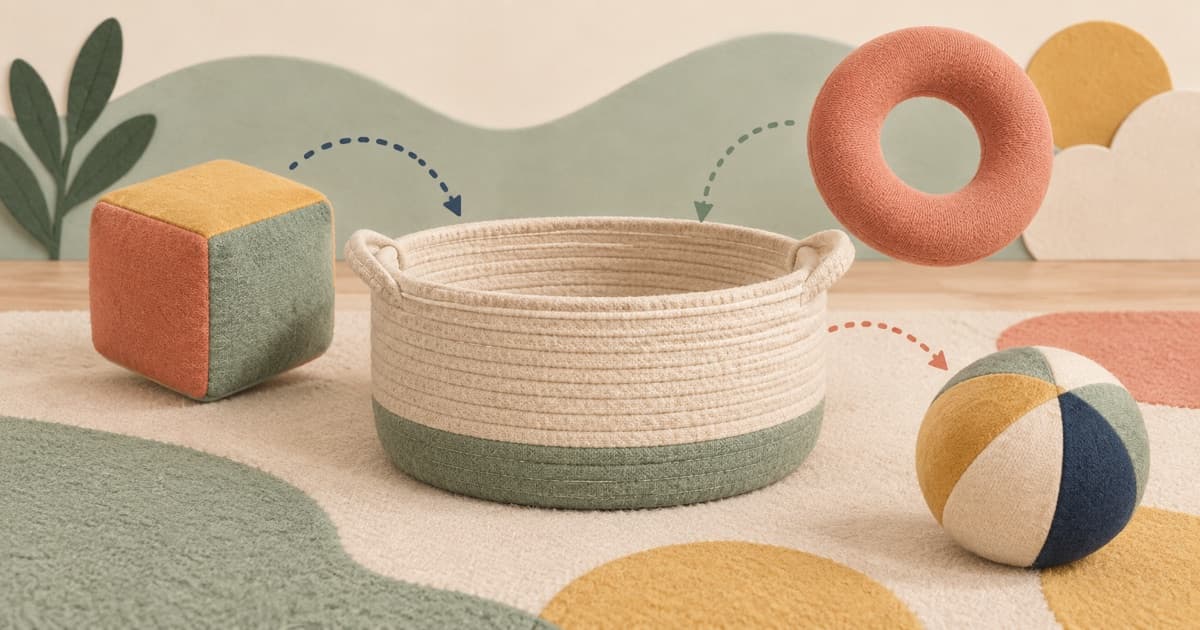
Container play needs only a wide, stable container and a few large age-appropriate objects. Put one object in, take one out, then pause. CDC shows putting an object into a container as one cognitive example around the first birthday, while WHO/UNICEF materials suggest stacking and in-and-out play for older babies. These are play ideas, not a test schedule. CDC one-year example WHO/UNICEF caregiver manual
Key takeaways
- Use a wide, stable, open container without a heavy lid or trapping spaces.
- Choose large clean objects with no loose, sharp, magnetic, battery, or breakable parts.
- Model one action and wait; dumping everything out is part of exploration.
- Stay close and end the activity when objects are used unsafely or interest fades.
Follow what your baby tries
| Takes every object out | Name “out” and let the basket stay empty. |
|---|---|
| Drops one object in | Name the sound or action, then pause. |
| Bangs two safe objects | Acknowledge the sound without demanding sorting. |
| Turns the container over | Check stability and make room for that exploration. |
The AAP encourages putting a few toys within reach so a baby can take them out and explore. Keep the goal flexible: grasping, releasing, banging, looking, and requesting help can all be part of the same play. Do not correct a baby for using the container differently when the action remains safe. AAP play guidance
Observe, record, and ask
Observe how your baby grasps, releases, switches hands, or asks for help. Record a concrete repeated pattern only if it would help a clinician understand a concern. Ask about persistent movement, vision, or interaction concerns instead of scoring the activity. Browse the newsroom hub, safe-object guide, and one-year context. Tracking is not diagnosis. baby-development guides safe play objects one-year development
Sources
Every figure in this guide traces to one of these sources.
- CDC — Milestones in Action: By 1 Year (2026)
- WHO/UNICEF — Care for Child Development
- AAP — The Power of Play
General information, not medical advice. Talk to your pediatrician about your own child.

- Category
- Parenting · Child development
- Type
- Baby milestone & activity companion
- Compatibility
- iPhone (iOS) and Android
- Business model
- Free to start, for little ones 0–24 months
 Press ContactThe Learning Time team