
October 5, 2026
Check your baby’s carrier position
Pause after putting on a carrier: check your baby’s visible face, clear airway, support, and fit. Recheck after feeding or adjustments.
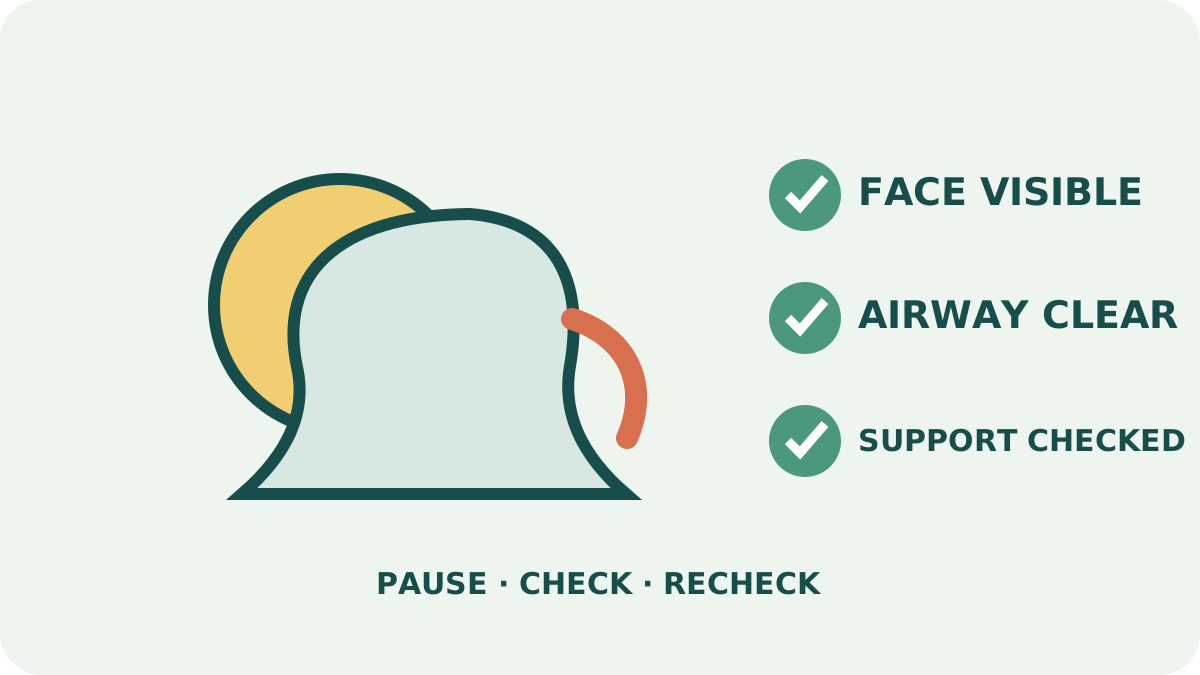
A carrier should fit both the baby and wearer, and the baby’s face should remain visible with the nose and mouth clear. AAP and Indonesia’s Ministry of Health both describe checks for a visible face, an open airway, and supported positioning. Product designs differ, so use the manufacturer’s instructions and get hands-on help if the fit is uncertain. AAP carrier safety guidance Kemenkes baby-carrying guidance
Key takeaways
- Read the manual for the exact carrier model and its size/weight limits.
- Keep the baby’s face visible; check that fabric or your body does not cover nose or mouth.
- Recheck position often, especially after nursing, movement, or changing the carrier.
| Face | Visible to you; nose and mouth are unobstructed. |
|---|---|
| Head and chin | Head is supported; chin is not pressed down toward the chest. |
| Fit and support | Baby is held close and supported according to the product manual; fasteners are secure. |
| Caregiver | You can move and breathe comfortably; stop if the carrier or baby’s position shifts. |
Before each walk
- Check the carrier label, condition, and instructions; do not use damaged buckles or seams.
- Secure the carrier and position the baby exactly as the manual shows.
- Look at the face and airway, then recheck after you stand and move.
- Take the baby out to feed; reposition and check again before carrying on.
What to observe
Notice whether your baby’s face stays visible and whether the position changes as you walk, bend, or sit. Babies who were premature or have breathing or other health concerns need individualized advice before use.
A useful note to keep
For a fit issue, note the carrier model, baby’s age and size, adjustment made, and what changed. Keep the product manual or a photo of its model label for a clinician or trained fitter.
A question for a clinician
Ask your clinician whether your baby’s health or age changes which carrier position is appropriate. Ask the manufacturer or a qualified local babywearing educator to check a model-specific fit.
Limits of this guide
This checklist cannot verify a particular product, fit, or a baby’s breathing. Follow the product’s current instructions and local safety advice. Tracking is not diagnosis; individual concerns belong with a qualified clinician.
Related Emomo guides: Check a child seat using its manuals Everyday play ideas Browse all Emomo guides
Sources
Every figure in this guide traces to one of these sources.
- AAP HealthyChildren: Baby Carriers: Backpacks, Front Packs & Slings (updated 2025-04-11)
- Kemenkes: Hai Ibu, Yuk Menggendong Bayi dengan Benar
- U.S. CPSC: Sling Carriers
General information, not medical advice. Talk to your pediatrician about your own child.

- Category
- Parenting · Child development
- Type
- Baby milestone & activity companion
- Compatibility
- iPhone (iOS) and Android
- Business model
- Free to start, for little ones 0–24 months
 Press ContactThe Learning Time team