
September 14, 2026 · Updated: September 14, 2026
Play by development pillar: 0–24 months
A four-pillar activity menu for physical, cognitive, social, and language growth, with age-flexible ideas that follow your baby’s cues.
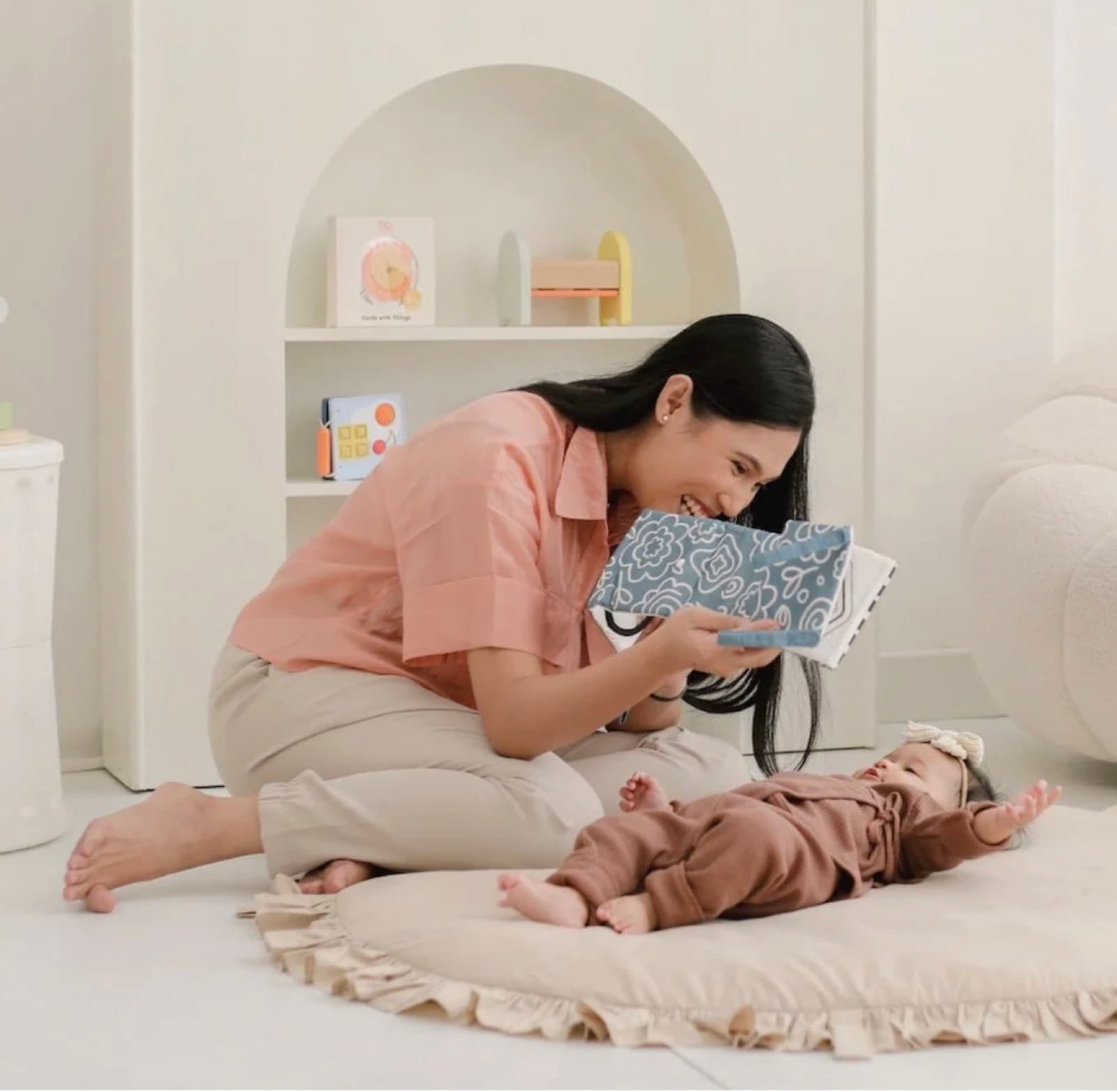
Stimulation does not need to look like a lesson. For babies and toddlers, it is the ordinary back-and-forth of moving, noticing, solving, connecting, and communicating with a responsive adult. Pick one small invitation, follow your child’s interest, and stop before play becomes a test.
Physical: move, reach, and balance
- 0–6 months: supervised tummy time, reaching for a face or toy, and slow side-to-side tracking.
- 6–12 months: floor play with safe objects to reach, transfer, push, or pull; let your baby change position at their own pace.
- 12–24 months: carry a soft object, squat to pick up a toy, kick a large ball, or walk along a safe route with you nearby.
Cognitive: notice, remember, and solve
- Hide part of a favourite toy under a cloth and wait for your baby to search.
- Offer two safe objects and let your child compare, stack, fill, empty, or combine them.
- Copy a household action such as wiping a table, then let your toddler imitate with a clean cloth.
Social: share attention and take turns
- Match your baby’s expression and pause for a response.
- Follow a point or gaze and name what your child is showing you.
- Play a predictable turn-taking game such as peekaboo, clapping, or rolling a ball back and forth.
Language: listen, gesture, and talk
- Answer coos and babbles as if they are a conversation, leaving space for a reply.
- Name the object your child is looking at instead of redirecting them to your choice.
- Read a familiar book in English, Indonesian, or both; gestures, sounds, and words all count as communication.
A simple weekly rotation
You can rotate the pillars across a week instead of trying to cover everything in one sitting. On Monday, follow a movement interest; on Tuesday, hide and find; on Wednesday, take turns; on Thursday, read and sing. Repeat the activity your child asks for. Repetition is how a baby learns, and it is easier for a family to sustain.
Set up once, then keep it simple
Keep a small basket of safe, washable objects where you can see your baby. Check for loose parts, magnets, button batteries, cords, and sharp edges before play. The safest activity is the one you can supervise without looking away to prepare another step.
These activities support observation; they do not diagnose or treat a delay. If a skill disappears or you have a concern, speak with your child’s doctor rather than adding more practice.
Emomo groups activity ideas with the same four pillars so you can see what your child enjoys and record a small moment when it happens. The aim is a calmer day together, not a fuller schedule.
Frequently asked questions
What does stimulation mean for a baby?
It means responsive everyday interaction: moving, noticing, solving, sharing attention, and communicating through play and routines. It is not a lesson or a performance test.
How do I know whether an activity is working?
Look for shared attention, interest, attempts, and enjoyment. Stop when your child turns away or becomes upset. Activities do not diagnose a delay.
Can I use these activities in two languages?
Yes. Read, sing, gesture, and take turns in the languages your family uses. Count communication across both languages.
Sources
Every figure in this guide traces to one of these sources.
- CDC, “Learn the Signs. Act Early.” developmental milestones
- CDC — Milestones by 6 months
- CDC — Milestones by 2 years
General information, not medical advice. Talk to your pediatrician about your own child.

- Category
- Parenting · Child development
- Type
- Baby milestone & activity companion
- Compatibility
- iPhone (iOS) and Android
- Business model
- Free to start, for little ones 0–24 months
 Press ContactThe Learning Time team