
October 5, 2026
Alternatives to wheeled baby walkers
Wheeled seated walkers are unnecessary for learning to walk and can bring babies near hazards. Choose supervised floor play instead.
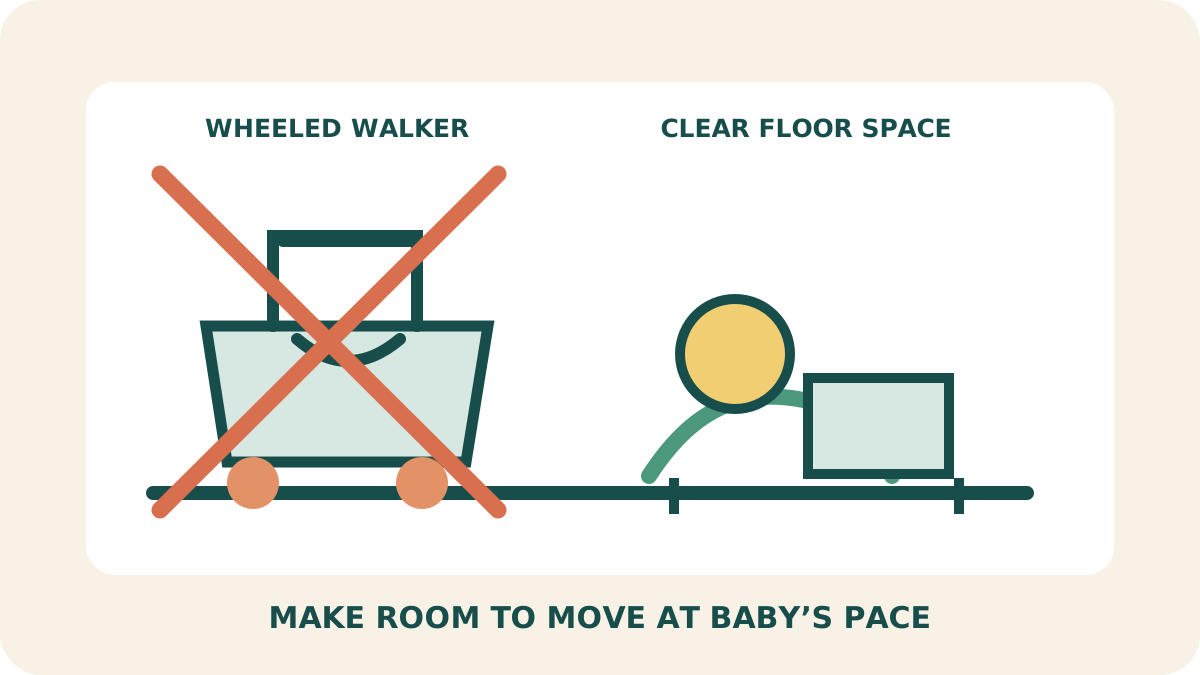
Wheeled seated walkers let babies move quickly and reach hazards they could not reach on the floor. The AAP says they do not teach babies to walk and recommends against their use; IDAI also describes fall and reach-related risks. Offer safe floor space and let your child practice movements at their own pace. A stationary activity center is a different product, so check its instructions and supervise it too. AAP’s baby walker safety guidance IDAI: Penggunaan Baby Walker
Key takeaways
- Do not use a wheeled seated walker as walking practice or a way to contain a baby.
- Floor play in a clear, supervised space allows the baby to move without walker wheels carrying them.
- A stationary activity center has no wheels but still requires age-appropriate use and supervision.
| Wheeled seated walker | Avoid; it can move fast and increase access to stairs, hot items, or water. |
|---|---|
| Clear floor space | Stay nearby, remove hazards, and let the baby roll, sit, crawl, pull, or cruise as they choose. |
| Stationary activity center | Use only if the product manual allows the baby’s age and size; supervise and limit time. |
| Furniture support | Check that furniture is stable and secured; stay close while the baby pulls up or cruises. |
Make a safer space for movement
- Move wheeled walkers out of the baby’s environment, including other caregivers’ homes.
- Clear a floor area away from stairs, cords, hot drinks, and water containers.
- Stay close while the baby explores; use a stable, secured support only when needed.
- Let the child pause or change position instead of prompting repeated steps.
What to observe
Notice which movements your baby chooses and what support they use. Record the surface and setting; a movement seen once is not a test or a deadline.
A useful note to keep
A brief note can capture a new movement, where it happened, and what support was nearby. Bring a pattern or concern to a routine visit rather than comparing with another child.
A question for a clinician
Ask your pediatrician or dokter anak what movement practice is appropriate if your child has a health condition, uses mobility support, or you have a concern about movement.
Limits of this guide
This guide addresses wheeled seated walkers, not every product called a walker or activity center. Check the exact product, current recalls, and its manual. Tracking is not diagnosis; individual concerns belong with a qualified clinician.
Related Emomo guides: Understand the broad range for independent walking Set up safer climbing play Browse all Emomo guides
Sources
Every figure in this guide traces to one of these sources.
- AAP HealthyChildren: Baby Walkers: A Dangerous Choice (updated 2022-08-15)
- IDAI: Penggunaan Baby Walker (2013-09-05)
- IDAI: Menjelajah Sebelum Berjalan
General information, not medical advice. Talk to your pediatrician about your own child.

- Category
- Parenting · Child development
- Type
- Baby milestone & activity companion
- Compatibility
- iPhone (iOS) and Android
- Business model
- Free to start, for little ones 0–24 months
 Press ContactThe Learning Time team